

-
Ti Series
Ti Classic Series
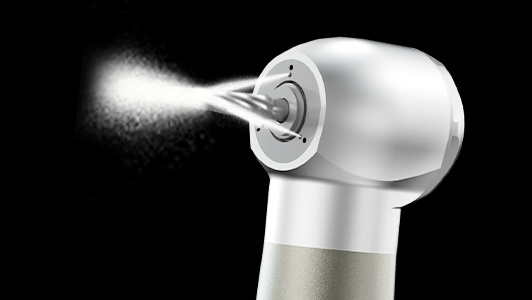
Ti1 M4/B2 (Mini Head)
4
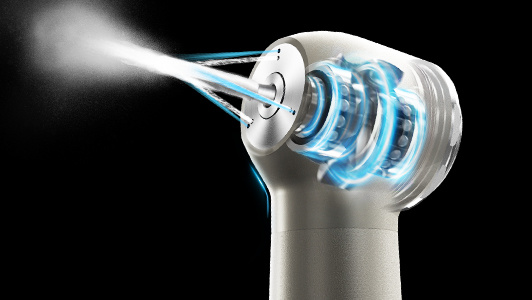
Ti2 M4/B2 (99° Head)
4

Ti3 M4/B2 (Torque Head)
4
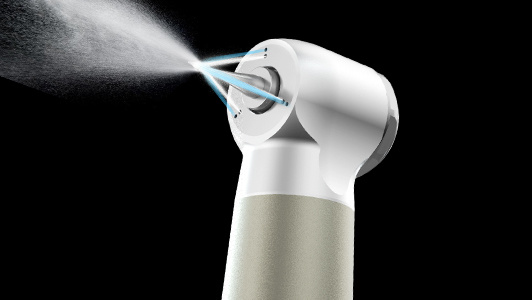
Ti4 M4/B2 (Super Mini Head)
4
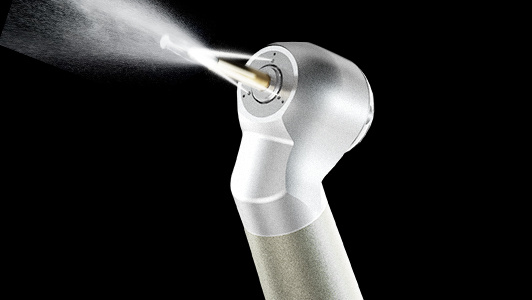
Ti45 M4/B2 (45°Head)
4
Max3 Series
M Series
C Series
Ti Low Speed Series
External Cooling
Internal Cooling
Dental Equipments
Handpiece Accessories
Contra Angle Head(Aluminum)
Contra Angle Head(Stainless Steel)
Endodontic File
-
-
-



Primary vs. Secondary Implant Stability: What Dentists Should Know
2026-09-30
Quick Answer
Primary implant stability is the mechanical stability achieved when a dental implant is placed, while secondary implant stability develops during healing as biological integration between the implant and surrounding bone progresses.
Primary stability is influenced by factors such as bone quality, implant design, and surgical technique.
Secondary stability is associated with the healing and osseointegration process.
Because implant stability can change over time, objective measurements such as ISQ can provide additional information for monitoring stability during different stages of implant treatment.
What Is Primary Implant Stability?
Primary implant stability refers to the mechanical stability of an implant immediately after placement.
In simple terms, it describes how firmly the implant is mechanically engaged with the surrounding bone at the time of surgery.
Primary stability is particularly relevant immediately after implant placement because the biological healing process has not yet fully developed.
Several factors can influence primary stability.
What Factors Affect Primary Implant Stability?
1. Bone Quality
Bone density and structure can influence how securely an implant engages with the surrounding bone.
Different anatomical locations may present different bone conditions.
2. Implant Design
Implant geometry can influence the mechanical interaction between the implant and bone.
Factors may include:
- Implant shape
- Thread design
- Implant diameter
- Implant length
- Surface characteristics
3. Surgical Technique
Implant placement technique can also influence initial mechanical stability.
The osteotomy preparation and placement procedure should follow the appropriate clinical protocol.
4. Implant Position
The location of the implant can affect the surrounding bone conditions and therefore the initial stability.
What Is Secondary Implant Stability?
Secondary implant stability develops during the healing process.
Unlike primary stability, which is mainly mechanical, secondary stability is associated with biological changes around the implant.
One of the key concepts involved is osseointegration.
As healing progresses, the relationship between the implant and surrounding bone changes.
This means implant stability should not necessarily be viewed as a fixed value.
It can evolve throughout treatment.
Primary vs. Secondary Implant Stability
The difference can be summarized simply:
| Primary Stability | Secondary Stability |
|---|---|
| Present at implant placement | Develops during healing |
| Mainly mechanical | Strongly associated with biological healing |
| Influenced by bone conditions | Influenced by osseointegration |
| Important immediately after placement | Important during later healing |
| Can be assessed initially | Can be monitored during follow-up |
This distinction helps explain why implant stability measurement can be useful at multiple stages.
How Does Implant Stability Change During Healing?
A simplified concept of implant stability over time can be represented as:
Implant Placement
↓
Primary Mechanical Stability
↓
Healing
↓
Biological Integration
↓
Secondary Stability
The actual stability pattern can vary between patients and implant cases.
Therefore, clinicians should not assume that every implant follows exactly the same stability trajectory.
Why Is Osseointegration Important?
Osseointegration refers to the biological process through which bone develops a stable relationship with the implant surface.
It is an important part of successful implant treatment.
However, osseointegration and implant stability are not identical concepts.
A useful way to understand the relationship is:
Osseointegration = biological process
Implant stability = mechanical/clinical condition
ISQ = numerical measurement associated with implant stability
These concepts are related but should not be used interchangeably.
Can Implant Stability Be Measured During Healing?
Yes.
Depending on the measurement system and clinical protocol, implant stability can be measured at different stages of treatment.
This can allow clinicians to compare:
- Initial stability
- Stability during healing
- Follow-up stability
For example:
| Stage | Purpose |
|---|---|
| Initial measurement | Establish a baseline |
| Healing measurement | Monitor change |
| Follow-up measurement | Compare stability |
| Pre-loading assessment | Provide additional information |
The exact timing should be determined according to the clinical protocol and the measurement system being used.
Why Is a Baseline Measurement Useful?
A baseline provides a reference point.
For example, suppose an implant produces an initial measurement of 65.
A later measurement can then be compared against that baseline.
The purpose is not simply to ask:
"Is 65 good?"
A more useful question can be:
"How has the measured stability changed compared with the initial measurement?"
This is one reason longitudinal measurement can be valuable.
How Does ISQ Relate to Primary and Secondary Stability?
ISQ provides a numerical representation associated with measured implant stability.
A clinician can use ISQ measurements to document stability at different stages.
For example:
Initial ISQ
→ Primary stability reference
Follow-up ISQ
→ Stability during healing
Later ISQ
→ Subsequent stability assessment
The numbers provide objective data that can complement other clinical information.
Can a Low Initial ISQ Increase During Healing?
Implant stability can change during healing, and measurements may increase, decrease, or remain relatively stable depending on the individual clinical situation.
The important point is that an implant's stability is dynamic.
Therefore, repeated measurements can provide more information than a single measurement.
Any change should be interpreted within the context of the patient's clinical condition and treatment protocol.
Can Primary Stability Be High but Later Stability Change?
Yes.
Primary stability is influenced heavily by mechanical factors at implant placement.
Secondary stability develops through biological healing.
Therefore, the factors contributing to stability at these two stages are not identical.
This is one reason why monitoring stability over time can be useful.
Why Should Dentists Monitor Implant Stability?
Objective monitoring may provide additional information during treatment.
Potential applications include:
Initial Assessment
Establishing an objective baseline after implant placement.
Healing Monitoring
Comparing stability measurements during the healing period.
Follow-Up
Tracking changes over time.
Treatment Documentation
Recording objective measurements as part of the clinical record.
Clinical Decision Support
Providing additional information alongside other clinical assessments.
Implant Stability Measurement and Treatment Planning
Implant treatment involves multiple clinical considerations.
Depending on the case, clinicians may evaluate:
- Bone conditions
- Implant design
- Implant location
- Surgical technique
- Stability
- Healing
- Occlusion
- Patient-related factors
An objective stability measurement can add another data point to this overall assessment.
However, it should not replace clinical judgment.
Can ISQ Alone Determine Implant Success?
No.
An ISQ value provides information related to implant stability, but it does not independently determine:
- Implant success
- Osseointegration
- Long-term prognosis
- Patient outcome
A comprehensive assessment should consider the entire clinical situation.
This distinction is particularly important when discussing implant stability measurement with patients.
Primary Stability and Immediate Loading
Primary stability can be particularly relevant when clinicians consider immediate or early loading protocols.
However, loading decisions are complex and depend on multiple factors.
These can include:
- Implant stability
- Bone quality
- Implant location
- Surgical conditions
- Occlusal factors
- Patient-related considerations
- Treatment protocol
Therefore, primary stability should be considered as one part of a broader clinical assessment.
Secondary Stability and Healing
Secondary stability becomes particularly relevant during the healing period.
As biological integration progresses, the relationship between implant and surrounding bone changes.
Monitoring stability during this period can provide objective information that complements clinical follow-up.
This is where technologies such as RFA and ISQ measurement become particularly relevant.
How RFA Can Support Stability Monitoring
Resonance Frequency Analysis provides a method for objectively assessing implant stability.
The simplified relationship is:
RFA measurement
↓
Resonance response
↓
ISQ value
↓
Stability monitoring
By repeating measurements when clinically appropriate, dentists can compare stability at different stages.
Primary and Secondary Stability: A Simple Example
Consider a hypothetical implant.
Day of Implant Placement
The clinician records an initial stability measurement.
Healing Period
The patient returns for follow-up.
Follow-Up
A second measurement is taken.
Comparison
The clinician compares the new measurement with the baseline.
The purpose is not to rely on a single number.
Instead, the measurements provide a trend that can be considered alongside clinical findings.
What Can Affect Stability During Healing?
Many factors may influence the stability profile of an implant.
These can include:
- Bone characteristics
- Implant design
- Implant location
- Surgical technique
- Healing conditions
- Patient-related factors
- Loading conditions
Because of these variables, stability measurements should always be interpreted in context.
Why Objective Measurement Is Useful
Clinical examination remains essential.
However, objective measurement can add another layer of information.
Compare:
"The implant feels stable."
with:
"The measured ISQ value has changed from the initial measurement to the follow-up measurement."
The second provides a numerical reference that can be documented and compared.
This does not make the measurement a complete diagnosis, but it can make stability monitoring more objective.
What Should Dentists Look for in an Implant Stability Measurement Device?
When selecting an implant stability measurement device, dentists may consider:
Measurement Technology
Does the device use RFA or another established measurement principle?
Measurement Repeatability
Can measurements be repeated consistently?
Implant Compatibility
Does the system support the implant systems used by the clinic?
Ease of Operation
Can measurements be performed efficiently within the clinical workflow?
Measurement Components
Are appropriate measurement components available?
Infection Control
Are the components compatible with the clinic's infection-control procedures according to the manufacturer's instructions?
Data Recording
Can results be documented and compared over time?
These factors can influence whether a measurement system is practical for routine use.
Primary vs. Secondary Implant Stability: Key Takeaways
For a quick reference:
Primary stability
- Exists at implant placement
- Mainly mechanical
- Influenced by bone and implant factors
Secondary stability
- Develops during healing
- Associated with biological integration
- Changes as healing progresses
ISQ
- Numerical stability measurement
- Can support longitudinal monitoring
- Should be interpreted with other clinical information
RFA
- Measurement technology
- Can be used to generate ISQ values
Frequently Asked Questions
What is primary implant stability?
Primary implant stability is the mechanical stability achieved when a dental implant is initially placed.
What is secondary implant stability?
Secondary implant stability develops during healing as biological integration between the implant and surrounding bone progresses.
What is the difference between primary and secondary stability?
Primary stability is mainly mechanical and exists immediately after implant placement, while secondary stability develops through the healing process.
Why does primary implant stability matter?
Primary stability provides the initial mechanical foundation for the implant and can be an important consideration in treatment planning.
Why does secondary implant stability matter?
Secondary stability reflects changes that occur during healing and biological integration.
Can implant stability change after implant placement?
Yes. Implant stability can change during healing as the relationship between the implant and surrounding bone develops.
How can implant stability be monitored?
Depending on the clinical protocol and device, stability can be monitored using objective measurement technologies such as RFA and ISQ.
What does ISQ measure?
ISQ provides a numerical value associated with measured implant stability.
Does ISQ directly measure osseointegration?
No. ISQ provides information related to implant stability and does not directly measure the biological process of osseointegration.
Can ISQ alone determine when to load an implant?
No. Loading decisions should consider the complete clinical situation rather than relying on a single ISQ value.
Conclusion
Primary and secondary implant stability describe two different but closely related stages of implant stability.
Primary stability is mainly mechanical and exists at implant placement. Secondary stability develops during healing and is associated with biological integration.
Because stability can change over time, objective measurement can provide useful information for monitoring these changes.
Technologies such as RFA and ISQ allow implant stability to be represented numerically, making it possible to compare measurements at different stages of treatment.
However, ISQ is a measurement tool—not a standalone diagnosis.
The most useful approach is to combine objective stability measurements with clinical examination, imaging, treatment conditions, and professional clinical judgment.
Previous:
Related News
Contact Us
Email:
info@koungsundental.com
Hotline:
+86-0757-81011906
Company Address:
4th floor, B elevator, Building F3, New Light Source Industrial Base, Nanhai District, Foshan City, Guangdong Province
Online Message
Leave us a message and get access to exclusive offers, product updates, and expert advice tailored just for you!
Contact Email:
Copyright © 2024 Foshan Koungsun Medical Technology Co., Ltd. SEO Powered By: 300.cn Privacy Policy
SAF Coolest v1.3.1.2 设置面板 GAGSD-ZGYF-JQZQE-ZZQ
V1.3.1 SVG图标库请自行添加图标,用div包起来,并命名使用

Get in touch
Are you interested in our products or services? Contact us immediately, our experts will provide you with professional services!
*Please leave your specific personal information, and we will have a product consultant contact you later
Address
No. 02 Industrial Plant, 4th Floor, 3rd Building,F Zone, Guangdong New Lighting Source Industrial Base, Langsha, Luocun, Shishan Town, Nanhai District, Foshan City, Guangdong Province, China